




Sustainability – Less Public Commitments, More Delivering on Objectives
Sustainability has moved out of the asset management limelight over the last few years. Faced with more political pressures and conservative policy agendas in some countries, firms in the investment industry are experiencing slower flows into sustainable funds, even in Europe earlier this year. Schroders has been a leader in sustainable investment for almost 30 years, featuring dedicated sustainability career experts across asset classes, markets and countries. And today we’re speaking to Andy Howard – who heads sustainable investment globally at Schroders -- for his take on where we are, where we are going next and what Schroders is doing to continue to expand its leadership role in sustainable investment opportunities through active management and engagement.
How to Avoid the “Valley of Death” in Sustainable Tech Startups

The “Valley of Death” has become a popular term to describe a challenging period for sustainability focused startups. Bridging this “valley of death” in commercialization of sustainable technologies is a key role today's guest believes her company can play for their clients. Cindy Jia is Head of the Sustainable Solutions Group at ING Capital. Her goals for the ING team include accelerating adoption of sustainable tech and facilitating an easy transition between the different capital pools that are available. Today we're going to discuss the challenges in achieving these goals and how ING has progressed.
Transforming the US Health Care System from the Ground Up

The US healthcare system is under siege, financial distress and rising frustration and dissatisfaction by the public to name a few challenges. My guest today is leading the way to a different approach. Rob Roy is SVP, Chief Investment Officer and Co-Head of Environmental Sustainability for AdventHealth, a non-profit healthcare system which employs 3,800 physicians and provides healthcare services to over 8 million patients through 52 hospital campuses in 9 states and 22 home health and hospice agencies. Rob, who has 36 years of institutional investment experience, oversees AdventHealth investments, which include operating capital and employee retirement portfolios totaling approximately $20 billion.
Schroders' Insurance Linked Securities & PE Investment Strategies Spur Climate Adaptation and Resilience
Climate Week 2025 in New York is approaching and all eyes are on the decarbonization and climate transition trend, with climate mitigation investing often taking center stage. But as the physical effects of climate change on people and the global economy continue to escalate, it’s increasingly obvious that investments in climate adaptation and resilience are also critical. And insurance, particularly the insurability of assets across different regions is rapidly becoming one of the most exciting avenues for meeting this need. Three investment experts from Schroders join us on today’s program to discuss what’s happening, including climate and crop insurance industries, insurance linked securities, and private market opportunities. Irene Lauro, an Economist at Schroders, focuses on climate issues; Christophe Etienne, is a Senior Natural Catastrophe Specialist on the Insurance Linked Securities team at Schroders Capital; and Martin E. Diaz Plata is Head of Private Equity Investments at Blue Orchard, an Impact investment manager owned by Schroders that runs the only private equity strategy in the world solely dedicated to climate insurance.
Climate Change is a Massive Disruptive Event Driving a Global Responsible Investment Mega Trend
Today’s guest on the Sustainable Finance Podcast believes that we are in the early stages of a persistent, global investment mega trend driven by a massive, disruptive event - Climate Change! Dr. Julie Anderson is Program Director for the Masters of Science in Sustainability Mgmt. at American University’s Kogod School of Business. She previously held senior leadership roles at top investment firms, including serving as Director and Head of iShares US Sustainable ETFs at BlackRock, where she managed $58 billion in assets and led strategic initiatives across the business. She believes this global megatrend is an opportunity to change the way we think about and choose sustainable investments. Investors should engage with and support companies that produce products in a responsible way that also creates healthy environments. We should focus on creating companies that are more sustainable, more profitable and more competitive because they are managing their Climate risks and opportunities better.
Investing in Disruptors and Trend-Makers to Create a Food Secure Future

According to Boston Consulting Group (BCG), sustainable food and plant-based innovations will grow in market share from $39B today to $290B by 2035! My guest today is a global player in helping transform the food system. Elysabeth Alfano, the CEO of VegTech, consults with public sector companies up and down the industry supply chain. Today, Alfano is talking about her role as advisor to EATV, an ETF which invests in the founders, disruptors and trend-makers with the vision and technology to create a food secure future.
How Public & Private Capital Join Forces to Scale Clean Energy Solutions
My guest in today’s replay of SFP Episode 272 is Marie Clara Buellingen, Head of Sustainable Finance Americas for Societe Generale Corporate & Investment Banking, one of the largest foreign banking organizations in North America. She is charged with solving the challenges of making public and private capital work together to scale clean energy solutions in the required timelines. The Societe Generale sustainable finance team develops ESG strategies and programs that meet with key stakeholder expectations and best practices such as TCFD, SASB, GRI, UNPRI and the CDP. We talk about approaches to clean energy technology solutions that she has seen work across multiple sectors of the global economy.
How to De-Risk & Accelerate Energy Transition Investment Flows in International Markets

How should energy transition investors and policymakers think about the role of technologies like green hydrogen and energy storage systems, and what policy frameworks are needed to de-risk investment in them that will accelerate the transition? This is especially true of supply chain risks when financing critical minerals projects and nature-based solutions like Voluntary Carbon Markets (VCM). Tokollo Matsabu and Patlong Advisory LLC, work with companies to globally deploy the company’s revolutionary electrolyser technology and make clean, green hydrogen economically viable in international markets. Today, SFP followers will also learn about Patlong’s Advisory role to the Lesotho Foreign Ministry on energy and sustainable finance policy initiatives.
How Climate Conscious Companies are Challenging the Insurance Industry

Insurance carriers are the second largest money management group and one of the most impactful regulatory industries on earth. How is Premiums for the Planet, a membership-based collective action movement, motivating this industry to incorporate more sustainable investment strategies? Join Founder and CEO Brad Stevenson as we discuss how the collective’s companies are challenging the investment practices of their insurance carriers to support the climate adaptation efforts of the collective.
Climate Resiliency and Returns Are Not Mutually Exclusive Concepts

Investors today have to consider sustainability and climate resilience across all asset classes in a diversified portfolio. In this episode, we speak with two professionals from Schroders to hear how these factors are integrated in energy infrastructure and real estate. David Boyce is Head of Schroders Greencoat US, which focuses on renewable energy infrastructure. Craig Morey is the Climate Lead for the Schroders Real Estate team, which makes direct real estate investments across the UK, Europe and Asia. Both of these teams reside inside Schroders Capital, the nearly $100 billion dollar private markets unit of Schroders, which also includes Private Equity, Private Debt & Credit Alternatives. The key message for SFP followers in this episode is that climate resiliency and returns are not mutually exclusive concepts. The current shift to climate resiliency in renewable energy and infrastructure is opening up very attractive investment opportunities, and enhancing current investments.
Climate Resiliency and Returns Are Not Mutually Exclusive Concepts
Investors today have to consider sustainability and climate resilience across all asset classes in a diversified portfolio. In this episode, we speak with two professionals from Schroders to hear how these factors are integrated in energy infrastructure and real estate. David Boyce is Head of Schroders Greencoat US, which focuses on renewable energy infrastructure. Craig Morey is the Climate Lead for the Schroders Real Estate team, which makes direct real estate investments across the UK, Europe and Asia. Both of these teams reside inside Schroders Capital, the nearly $100 billion dollar private markets unit of Schroders, which also includes Private Equity, Private Debt & Credit Alternatives. The key message for SFP followers in this episode is that climate resiliency and returns are not mutually exclusive concepts. The current shift to climate resiliency in renewable energy and infrastructure is opening up very attractive investment opportunities, and enhancing current investments.
How Sustainable Infrastructure Can Be Financed at Lower Cost and Reduce Carbon Emissions

For real estate investors and owners, figuring out how to reduce carbon emissions without raising the cost of building new or retrofitting is a major challenge. My guest today, Laura Rapaport, founder and CEO of North Bridge, is leading the way in providing financing that does just that. C-PACE is a long term, fixed-rate credit product secured by a special property assessment, and North Bridge has recently secured a $1 billion commitment from the Carlyle Group to originate C-PACE loans. Rapaport explains how this financing can ensure that resilient and sustainable real estate projects have the flexibility required for completion while reducing carbon emissions and energy consumption and benefiting local economies. All PACE projects to date are expected to reduce carbon emissions by 3 million tons.
Why University Leadership Is Critical for Solving the Climate Crisis

On today’s program we talk about how universities are key innovators in solving the climate crisis. At the same time, as we read daily in the news, they’re dealing with tremendous uncertainty. So how is Lisa Sachs, the Director of the Columbia University Center on Sustainable Investment and the recently launched Columbia Climate School MS in Climate Finance, coping with these uncertainties in U.S. climate policy and sustainable finance? And what about the volatility in career opportunities that graduates of these programs will face during the next four years? For Sachs, these are just two of the stress points she is managing in today’s university environment. Sachs is also an Associate Professor of Professional Practice at the Columbia Climate School, where climate science and climate change are engaged in the 21st Century’s existential challenge for supremacy.
HealRWorld: Where Your Everyday Spend is a Vote for the World You Wish To See

On today’s program Michele Bongiovanni talks about the 1.3 million member online global community and marketplace she launched in 2012. HealRWorld’s goal is igniting systemic change by unleashing the transformative power of sustainability-focused consumers and businesses. Members can find and shop socially committed celebrities, musicians, and small and medium-sized businesses from 170 countries while supporting the environment and social good. Shop the brands and small businesses whose products align with the values of sustainability-minded consumers.
The Future of Sustainable Investing: What Needs to Happen

How does an “immigrant kid” become the Founder of a firm that provides sustainable solutions for institutional investors, including ESG market analysis and education, regulatory risk management and investment process design? Allison Binns is the Founder and Principal of Peregrine Strategy, She is also a Senior Advisor at Danu Venture Group, which provides early-stage investment access to technology companies focused on national security, new infrastructure and their enabling industries. Allison says her background as an “immigrant kid” has shaped the way she approaches investments and sustainability in general. We’re fortunate to have her as our guest for this episode of the SFP.
Finally! A Payment Card Powerhouse Challenges the Industry to Go Beyond Compliance
Payment card issuer and processing powerhouse Enfuce challenges the global payment industry to go beyond compliance with the recent launch of the Fortitude Pledge, a bold new compliance and security standard. My podcast guests today are co-CEOs and co-Founders at Enfuce, Monika Liikamaa and Denise Johansson. The Pledge aims to eliminate 100% of financial crime risks across all Enfuce-processed card transactions. Enfuce believes that stopping 100% of human trafficking, money laundering, and terrorist financing is not optional—it’s essential to create a sustainable, 21st Century business model and a direct commitment to UN Sustainable Development Goal #16 and I’m very pleased to have Monika and Denise join me for this important conversation.
How a Nepalese Bank Is Growing the Sustainable Investment Services Sector through a Global Marketplace
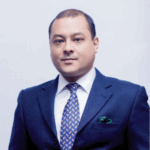
Shivanth Pande is the founder of NIMB ACE Capital, the first investment bank in Nepal to offer systematic sustainable investment plans and other financial services for employees who work for the bank’s corporate clients as well for the large underbanked population. Using a strategy that includes a variety of sustainable mutual funds, the bank now has more than 600,000 clients. In addition, Pande is the co-founder and current chairman of M! Nepal, a social venture that facilitates banks and microfinance companies in extending outreach of financial products to the poor urban and rural populations in Nepal.
Boots on the Ground: The Key to Investing in the Global Energy Transition
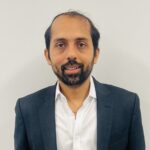
Aniket Shah is Managing Director & Global Head of the Sustainability and Transition Strategy at Jefferies, a global financial services firm ranked #1 in the Institutional Investor Survey for Sustainability in the US, Europe, Japan and Australia in 2022-2024. Shah talks with us about using a face-to-face approach to advancing the energy transition: investors walking the streets, visiting the plants, talking to the people and learning the business culture. Shaw explains how in the current economic environment, climate adaptation and resilience-related investments are critical to continuing the global agenda on sustainability and human rights. Shah serves on the Board of Directors of the UN Sustainable Development Solutions Network and teaches as an Assistant Adjunct Professor at Columbia University's School of International and Public Affairs.
Reclaiming First Nations Heritage with Green Hydrogen Energy & Economic Opportunity
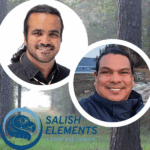
The story of Salish Elements began when one man gifted a bundle of tobacco to another. Rueben George and Omar Kassem first met at a gathering designed to provide Indigenous communities with the support of technology and business activists. Omar, is an energy industry engineer, working towards safely deploying hydrogen into British Columbia's utility infrastructure. Rueben is a globally recognized environmentalist and best-selling co-author of "It Stops Here", the story of the spiritual, cultural, and political resurgence of an indigenous nation taking action to reclaim their lands, waters, and food systems in the face of colonization. The gift of tobacco from Omar to Rueben led to discussions of how a green hydrogen energy business could provide an alternative to oil as well as share an economic opportunity with other Indigenous communities and First Nations in Canada. The idea of producing green hydrogen across B.C. with other Indigenous communities has become the story of Salish Elements, which Omar and Rueben have graciously agreed to share with our followers.
Turning Degraded Land into Thriving Agroforestry Systems for Local Farmers
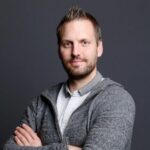
In 2022 alone, 4.1 million hectares of tropical forest were lost due to drought, deforestation, and wildfires, contributing significantly to global carbon emissions. Viridis Terra is addressing this urgent issue by focusing on the restoration of significantly degraded lands in the Ucayali and Loreto regions of Peru. Today’s SFP guest, Martin Beaudion Nadeau, is Viridis Terra’s Founder and CEO. In the program he talks about more sustainable farm management systems, including establishing biodiverse forests and agroforestry practices, and integrating native tree species and crops like cocoa and citrus. This aids in carbon sequestration and provides a sustainable source of income for local farming communities, empowering them toward long-term economic stability.
Bridging the Missing Middle in Climate Infrastructure Financing

Low-carbon infrastructure projects that rely on proven technologies are often overlooked as too early-stage or lacking the scale to attract infrastructure investors. My guest today, Joshua Kaufman, CEO and Co-Founder at Khasma Capital, explains how his company bridges the divide between available capital and the urgent needs of climate-critical projects, specifically Circular Economy and Emerging Energy Transition technologies. These are industries with tremendous potential but high early stage requirements. Khasma Capital works with project developers to de-risk opportunities, attract large-scale funding and successfully reach commercialization.
How Real-World Decarbonization in Private Markets Is Driving Outcomes on the Ground

What’s happening with climate-focused investment strategies given current market uncertainty? Today’s program reports good news. Schroders Capital, with $97 billion of AUM in global private capital, is applying decarbonization strategies to every asset class in its portfolios. My guest is Holly Turner, Climate Specialist at Schroders Capital. She walks us through how her team works with the companies in its portfolios to evaluate four levers for decarbonization. These levers consider both the portfolio and real-world outcomes an investment can achieve and which private market asset class is most likely to achieve each outcome, as well as contribute to a company’s net zero commitment.
How the Fashion Industry Is Transforming Into a Global Sustainability Leader

The textile and fashion industries are responsible for 8% of global CO2 emissions, second only to Oil and Gas. 73% of clothing products end in landfills or get incinerated and 63% of products are plastic. The women who make up 80% of the textile industry workforce need decent working conditions and economic growth opportunities. These are the social and environmental impacts about which today’s podcast guest creates daily awareness and an urgent call for industry transformation. Marci Zaroff is the Founder & CEO of Ecofashion Corp. She devotes her days to advocacy with consumers, corporates and policy makers for end-to-end sustainable textile manufacturing. Her efforts and those of many others calling for a more sustainable apparel industry are working and I’m very glad to have her join me for this conversation.
How One Harvard Instructor Is Making the Sustainable Investment Case
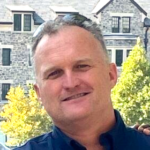
“What do investors want?” is the primary question motivating Graham Sinclair, my guest today and one of the pioneers in sustainable investing: from launching the PRI (Principles in Responsible Investment) into emerging markets in 2007, to working with iconic firms like KLD, IFC, Parametric and AIG on Wall Street. We sat down to talk about Sinclair’s course at Harvard Extension School, “Making the Sustainable Investment Case,” which is one half of the Sustainable Finance micro certificate and a benchmark for candidates in the Masters of Sustainability program. New for 2025 is a two-part deep dive on Nature x Investment, drawing on the cutting-edge work of Irina Likhachova in biodiversity and fixed income. Sinclair is once again using “Fund Labs” projects for hands-on experiential learning with four specialist sustainable investment managers: Bill Page + Liz Simmie + Garvin Jabusch + Christofer Halldin. Listeners are in for a treat as Sinclair offers a unique perspective on what investors want.